
- Thu July 23, 2026|
 Alwasat FM|

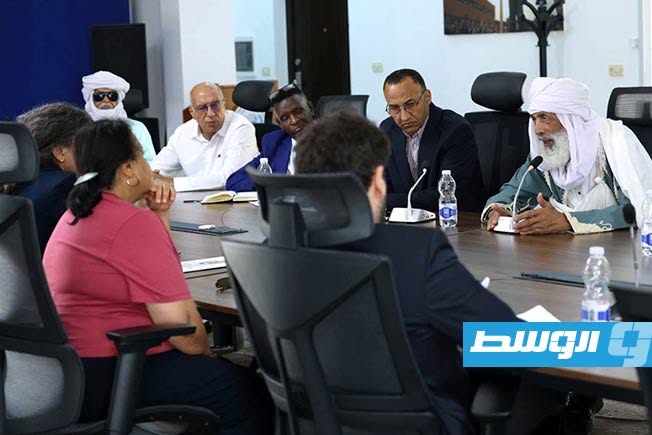
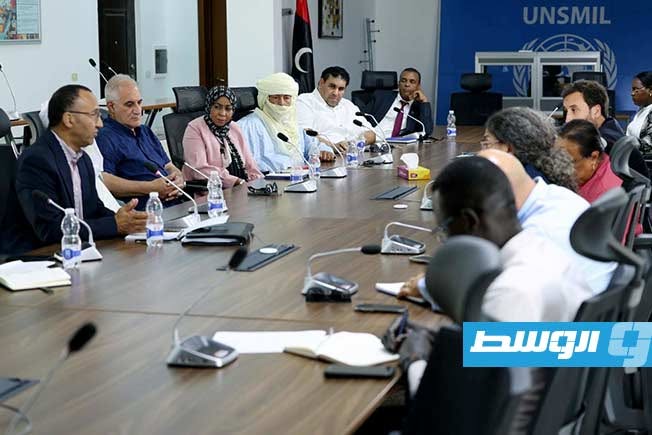
Stephanie Koury, Deputy Special Representative of the UN Secretary-General for Political Affairs, discussed the recommendations of the Structured Dialogue and the latest developments in the political process with a delegation from the Fezzan National Political Gathering, reaffirming the UN Mission’s commitment to conducting broad consultations to support the achievement of a Libyan-led and Libyan-owned political solution.
The United Nations Support Mission in Libya (UNSMIL) said in a statement posted on its Facebook page that the meeting was part of a series of meetings Koury is holding with various segments of Libyan society, with the participation of prominent political and social figures from across the Fezzan region.
The mission added that the discussions focused on the political process, including the recommendations of the Structured Dialogue, and the importance of active participation by all Libyan regions, in addition to discussing Fezzan’s priorities in future efforts related to governance, development, and stability.
Participants emphasized the importance of the Fezzan region’s historic role in building the Libyan state and its institutions, stressing the need to ensure the region’s active participation in shaping the country’s future. They also expressed their support for the dialogue and UN-sponsored efforts to reach a peaceful solution to the political crisis.
For her part, Koury highlighted the Fezzan region’s unique history, geography, and experiences, affirming the UN Mission’s commitment to continuing consultations with various Libyan stakeholders to support a Libyan-led and Libyan-owned political solution.
According to the UN Mission, the Structured Dialogue brought together some 120 participants from across Libya and, since December 2025, has held eighteen in-person and virtual sessions across four tracks: national reconciliation and human rights; security; the economy; and governance. The outcomes of these tracks were presented on June 7 to approximately 200 participants, including members of the dialogue, representatives of the diplomatic corps, and the UN Mission team.


Comments