
- Fri July 17, 2026|
 Alwasat FM|

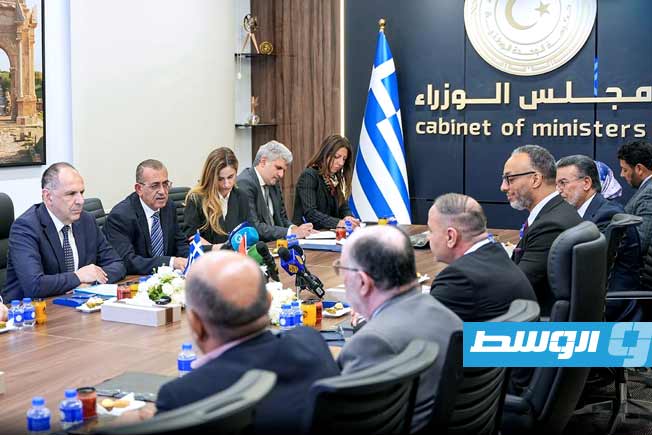
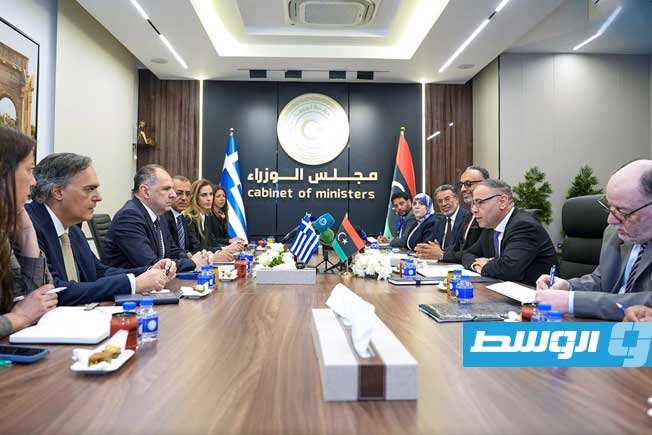
Taher Al-Baour, the Acting Foreign Minister for the Government of National Unity, discussed the issue of illegal migration with Greek Foreign Minister Georgios Girapetritis in Tripoli on Monday.
They emphasized the importance of adopting a comprehensive approach based on burden-sharing, strengthening security and technical cooperation, and intensifying training programs, and addressing the root causes of migration, thereby striking a balance between humanitarian considerations and security requirements.
The two sides also discussed the work of the Libyan-Greek Joint Technical Committee for the Delimitation of Maritime Borders, noting the importance of continuing “dialogue in a positive spirit,” based on the rules of international law, in a manner that enhances stability and serves the common interests of both countries, according to a statement by the Foreign Ministry.
Cooperation in the Fields of Energy, Infrastructure, and Transportation
The two sides reviewed the course of bilateral cooperation and ways to develop and expand it to include strategic areas, including energy, renewable energy, infrastructure, maritime transport, and the blue economy, in addition to strengthening partnerships in the fields of higher education, scientific research, cultural exchange, and institutional capacity building.
The talks addressed recent regional and international developments, with both sides emphasizing the importance of intensifying political coordination and exchanging views, thereby contributing to supporting security and stability, promoting peaceful approaches to resolving crises, and consolidating the principles of good neighborliness and regional cooperation.
Greek Companies’ Support for Reconstruction Efforts
The meeting also addressed the role of Greek companies in supporting reconstruction efforts within Libya, within the framework of the Government of National Unity’s “Return to Life” plan. The importance of creating an attractive investment environment and expanding areas of economic cooperation was emphasized, particularly in the energy and infrastructure sectors, in addition to opportunities for cooperation in the fields of health, tourism, and logistics.
Both sides also stressed the need to facilitate the return of Greek companies to the Libyan market, resume direct flights, and strengthen maritime links, thereby contributing to the revitalization of the movement of people and goods, supporting trade, and consolidating the economic partnership between the two countries.
The meeting concluded with an affirmation of the importance of maintaining high-level communication channels and activating joint institutional frameworks, reflecting the political will to elevate Libyan-Greek relations to more advanced and integrated levels.


Comments