
- Sun June 28, 2026|
 Alwasat FM|

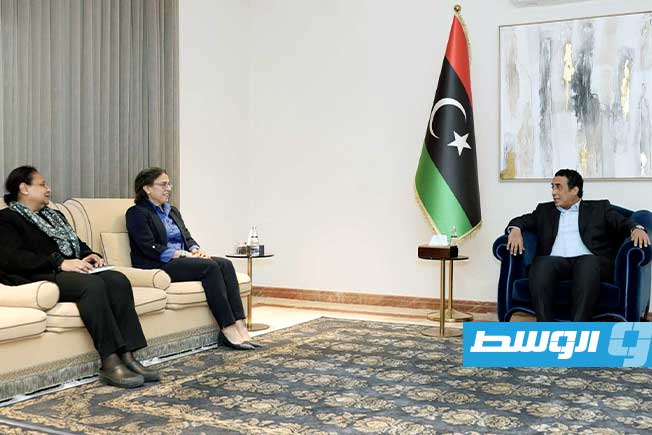
Stephanie Koury, Deputy Special Envoy of the UN Secretary-General to Libya, outlined the UN’s plans for the coming phase regarding the “Structured Dialogue” tracks to Presidential Council leader Mohamed Menfi during a meeting in Tripoli.
According to a statement from Menfi’s media office, Koury affirmed during the meeting that the mission would continue its efforts to facilitate dialogue and bridge differences, with the aim of reaching a comprehensive consensus that paves the way for ending the transitional phase.
For his part, Menfi affirmed that the Presidential Council “views positively the UN’s efforts aimed at supporting consensus among the Libyan parties,” stressing the importance of any initiative being based on “existing legal and constitutional frameworks, ensuring clarity in the political process and adherence to the established parameters of the political process.”
Menfi affirms national ownership of any potential track
Menfi also reiterated the Council’s position, which is based on “national ownership and support for any track leading to the holding of elections within a specific timeframe,” while stressing the necessity that the proposed track preserve institutional unity and the need to involve all national components in any arrangements leading to a comprehensive settlement, thereby ensuring its sustainability and acceptance by all parties.
The UN mission launched the “Structured Dialogue” in late 2025, stating that it aligns with its mandate to use its good offices to facilitate a comprehensive, Libyan-led political process. This initiative aims to foster consensus on governance arrangements leading to elections and achieving long-term stability, without imposing predetermined outcomes.
The Mission emphasized that the “Structured Dialogue” is not a decision-making body for forming a new government; rather, it focuses on providing practical recommendations to create an environment conducive to elections and address pressing challenges in the areas of governance, the economy, and security, thereby strengthening state institutions and supporting the building of a national consensus on the path to stability.




Comments