
- Fri June 12, 2026|
 Alwasat FM|

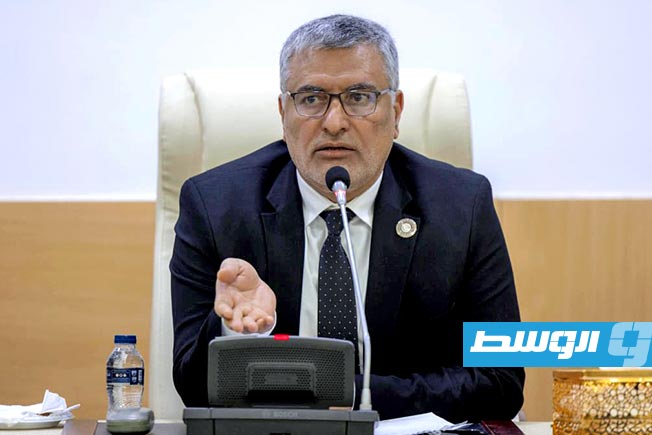
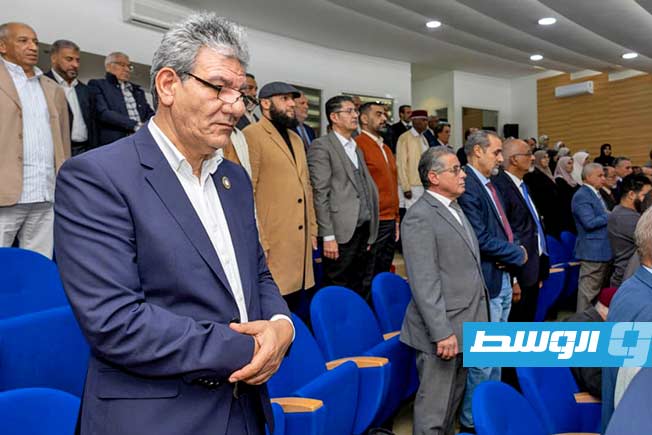
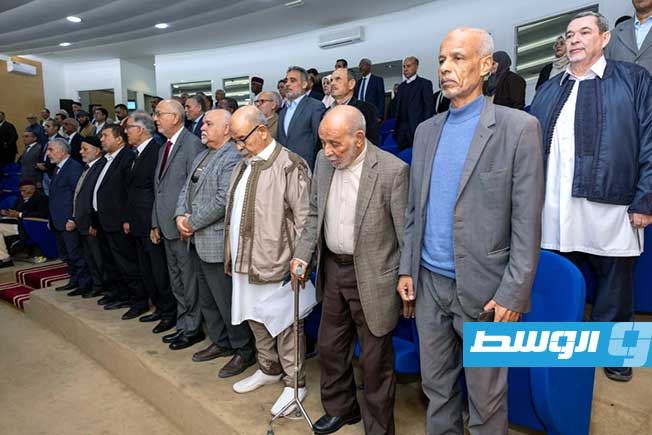
This was stated in its Resolution No. 4 of 2026 regarding the rules governing the council’s representation in political processes, which was issued at the conclusion of its 116th plenary session held in Tripoli on Monday. The session was chaired by President Muhammad Takala, and attended by First Vice President Hassan Habib, Second Vice President Musa Faraj, and Rapporteur Belqasim Debrez, alongside Council members.
Representation of the State Council in Any Settlement or Negotiations
Article 1 of the resolution states: “The High Council of State rejects any political settlement that violates the provisions of the Libyan Political Agreement adopted pursuant to the Constitutional Declaration and its amendments.”
Article 2 stipulates: “No representation of the High Council of State in any settlement or negotiations shall be considered valid unless it is based on an explicit and prior authorization issued by the Council, pursuant to a resolution adopted in an official plenary session with a quorum.”
It affirmed in Article 3 of the resolution that “no action or representation taken in violation of the provisions of this resolution shall entail any obligations on the part of the council, and shall be deemed null and void under the law."
It emphasized in Article 4 the implementation of the provisions of this resolution from the date of its issuance, calling upon all concerned parties to implement it.
Rejection of any political settlement contrary to the political agreement
The Council stated that members “discussed at length the latest developments in the political landscape and the efforts being made to advance the political process toward the upcoming elections. They also addressed parallel tracks seeking to impose settlements outside the framework of the official consensus, which would threaten the country’s security and stability.”
It added that “following extensive deliberations, Council members voted unanimously to issue a resolution rejecting any political or economic settlement conducted outside the framework of the Libyan Political Agreement, affirming that any representation of the Council in such settlements is null and void unless based on an official mandate issued by a decision of the High Council of State.”
Regarding the economic situation and the associated spread of corruption and administrative and financial abuses within state institutions, the High Council of State affirmed that “this issue is at the top of its priorities, given that corruption is one of the main causes of the deterioration of economic conditions.”
Activation of State Council Committees
The Council emphasized that it “will continue to exert maximum efforts to curb this phenomenon by activating the work of the specialized committees formed to monitor the performance of ministries and agencies, track suspected cases of corruption, and refer those involved to the competent authorities for accountability, thereby contributing to the eradication of this dangerous scourge.”
The Council had previously formed a committee to monitor the oil sector and related violations, a committee to monitor and track violations at the Central Bank of Libya, a committee to monitor the General Electricity Company, and a committee to monitor the Ministry of Education, particularly regarding the issue of textbooks.


Comments