
- Sat June 6, 2026|
 Alwasat FM|
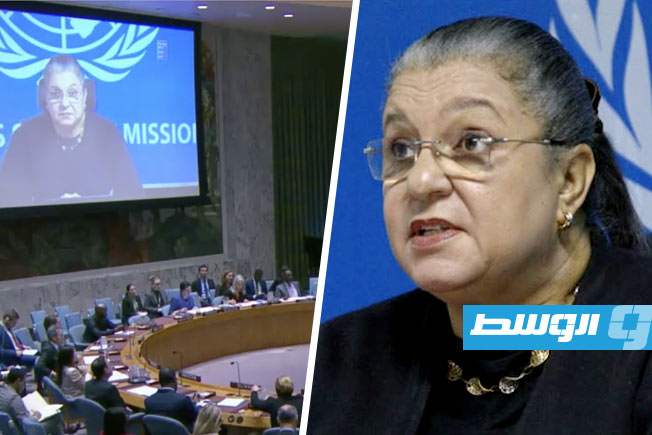
The Special Representative of the Secretary-General and Head of the United Nations Support Mission in Libya, Hannah Tetteh, warned that politicizing and dividing the judiciary would harm the political process in Libya, pointing to the ongoing rivalry between the Supreme Constitutional Court in Benghazi and the Supreme Court in Tripoli.
In her regular briefing to the UN Security Council on Wednesday, Tetteh said, “The Constitutional Court in Benghazi operates in parallel with the Constitutional Chamber of the Supreme Court in Tripoli, resulting in rivalry, conflicting rulings, and judicial inconsistency.”
She stressed that “the repercussions of these developments and contradictions threaten the unity of the judiciary and weaken the administration of justice in Libya by disrupting the last mechanism that ensures the accountability of governments and authorities,” warning that “the politicization and division of the judiciary harms the political process, elections, security, and human rights, and threatens the unity of the state.”
In her briefing, Tetteh referred to recent developments in the crisis, including the rulings issued by the Constitutional Chamber of the Supreme Court on the unconstitutionality of a number of laws issued by the House of Representatives, and the recent decree issued by the head of the Presidential Council Mohamed Menfi.



Comments