
- Sat June 13, 2026|
 Alwasat FM|
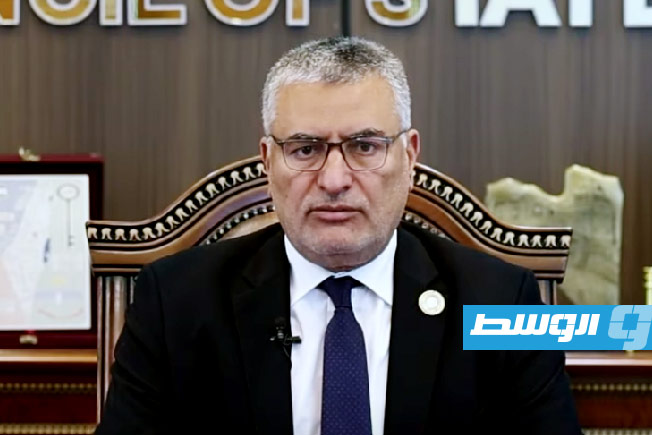
The President of Libya's High Council of State, Muhammad Takala, said that the most serious threat facing countries after revolutions is “attempts to circumvent the will of the people, strip institutions of their substance, and confiscate the nation's right to choose its leaders.”
He added that “legitimacy is not granted by unilateral decisions nor imposed by force, but is derived from the free will of the people, respect for political agreements, and commitment to the constitutional rules that govern the relationship between state institutions.”
In a speech marking the 15th anniversary of the February 17 revolution, he added that the council “affirms that protecting the goals of the February revolution is not a slogan for constitutional and national responsibility, but requires adherence to legitimacy, defense of the principle of consensus, and rejection of all unilateral measures that threaten the unity of the state and undermine the democratic process.”
The revolution is the beginning of a path toward a state of institutions, not individuals
Takala continued: “We will continue to perform our national duty with full responsibility in defense of the unity of institutions, preservation of the democratic process, and empowerment of the Libyan people to exercise their full right to choose their leadership through free, fair, and transparent elections based on a consensual law that guarantees their integrity and legitimacy.”
He continued: “Building a state is not the responsibility of a single institution, but of the entire nation. Stability will only be achieved through joint efforts, putting the interests of the nation above all other considerations, rejecting division, and working for a future worthy of the sacrifices of the Libyan people,” stressing that the revolution “was not the end of the road, but rather the beginning of a long journey toward the state we all dream of, a state of justice and law, a state of institutions rather than individuals, a state of sovereignty rather than subordination, a state of the people rather than the de facto authority.”



Comments